




























Ime Akpan
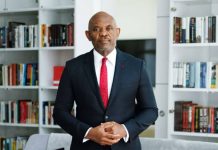
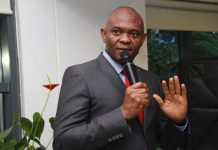
The founder of the Tony Elumelu Foundation (TEF) and chairman of Heirs Holdings, Mr. Tony Elumelu, has challenged Africa to unlock its vast economic potential by mobilising indigenous capital, empowering women entrepreneurs, and building strong institutions.
He stated this in a keynote address delivered at the Women in Management, Business, and Public Service (WIMBIZ) Annual Conference held recently in Lagos.
Speaking under the conference theme ‘Rooted, rising, ready: born in Africa, built for the world,’ Elumelu addressed the topic ‘The geography of opportunity: Why the world needs what Africa has,’ painting a compelling picture of a continent poised for transformation but hindered by structural challenges.
“By 2050 our working-age population will grow by hundreds of millions. We hold the minerals that will power the energy transition. We have the land, the sun, the rivers and the youngest population on earth. Everyone else is ageing. We are not. That is not a problem to be managed. This is the single greatest commercial opportunity of this century, and it is ours,” he declared.
How his journey started
Elumelu made personal reflections on his little beginning, his restaurateur mother and the ‘master class’ business lessons he underwent in his the mother’s eatery.
” I started with a mother who ran a small restaurant and worked harder than anyone I have ever known. I watched her turn very little into a living, and a living into a future for her children,” he said. “When people ask me whether women can lead African business, I find the question strange. In my experience, they already do. We have simply not given them the capital, the title or the credit.”
Elumelu also related how, at 34, he led a group of young Nigerians to acquire a struggling bank that became the foundation of his business empire.
He described his life’s work as “democratising luck” and making opportunity distributed by merit rather than “accident of birth, of geography, of gender.”
My life’s work is to make it distributed by merit instead. That is what Africapitalism means to me: the private sector creating economic prosperity and social wealth at the same time, and doing it for everyone, not for a fortunate few,” he added.
Obstacles to Africa’s prosperity
The TEF chairman outlines three critical barriers standing between Africa and its potential: power, value creation, and capital.
On power, he said: “We cannot talk about industrialisation without fixing electricity. Factories cannot run without it. Hospitals and schools cannot function without it,” he declared, noting that Africa has the young creative minds but lacks the grid to power the AI economy.
On value creation, he challenged the centuries-old narrative of extraction saying: “For a hundred years, the question asked of Africa has been: how much can be extracted? I want to change the question. How much value can be created here? Refine it. Process it. Brand it. Then sell it to the world. That is how a continent moves from supplier to participant.”
On capital and with aid budgets collapsing globally, Elumelu said “the future is investment and trade, not aid,” and called for the mobilisation of African capital—from pension funds, insurers, banks, and family offices—to finance African solutions.
He cited Seplat’s share price growth from £3 to £9 and a current market capitalisation of $7 billion as evidence of what African capital can achieve.
The TEF impact
Highlighting the Foundation’s achievements, Elumelu revealed that over 15 years, it has deployed more than $120 million in seed capital to 24,633 young entrepreneurs across all 54 African countries. Forty-eight per cent of beneficiaries are women—not through quotas, but because “our selection process is objective and we judge on the quality of the business plan alone.”
These entrepreneurs have created over 1.5 million jobs and generated more than $4.2 billion in revenue, with Harvard Business School now teaching the Foundation’s methodology.
He shared the stories of three women entrepreneurs—Princess Adeyinka Tekenah (Happy Coffee), Olamide Ayeni-Babajide (recycling), and Nkem Okocha (Mama Moni fintech)—each of whom received just $5,000 but built enterprises employing thousands.
“Princess Adeyinka Tekenah received five thousand dollars from us in 2015. She built Happy Coffee, seed to cup, in a country where ninety per cent of coffee is imported, buying her beans from women farmers in Taraba State. More than a thousand jobs. She organised the first Lagos Coffee Festival. She intends to be the first publicly listed Nigerian coffee brand, and I would not bet against her.
“Olamide Ayeni-Babajide took five thousand dollars in 2016 and built a recycling company from tyre waste. Revenue up more than twenty-folds. Fifteen thousand people trained, most of them women and girls.
Nkem Okocha received five thousand dollars from us in 2015. She built Mama Moni, a Fintech Social Enterprise that is closing the credit gap for low-income female entrepreneurs in rural and urban slum communities in Nigeria through easy access to finance.
“Mama Moni’s web platform enables socially conscious individuals to invest in low-income women by lending to them to fund their businesses.
“Three women. Fifteen thousand dollars between them. Thousands of jobs. Now tell me the world does not need what Africa has,” he added.
In 2026 alone, he said 265,529 young Africans applied to the Foundation’s programme, but only 3,200 could be funded—just one in every 83 applicants.
“That is not a shortage of entrepreneurial talent; it is a shortage of capital,” Elumelu stressed.
He announced that TEF had so far funded 13,360 African female entrepreneurs and “I look forward to funding many more.”
Leading by example
Elumelu challenged other business leaders to examine their own organisations, citing his companies’ track record of promoting women to leadership positions.
He noted that his wife, Dr. Awele Elumelu, chairs multiple companies including Transcorp Hotels PLC and Heirs Energies, Nigeria’s sixth-largest oil producer. He also highlighted Owen Omogiafo, President/GCEO of Transcorp Group, and Somachi Chris-Asoluka, CEO of the Tony Elumelu Foundation.
The Heirs Holdings Group has eight female chairpersons and CEOs, while UBA Group has eight female CEOs across Africa. “I am not telling you this to be congratulated. I am telling you because I want every chairman—or chairwoman—and every chief executive in Nigeria who hears about this speech to ask himself—or herself—one question: if Tony Elumelu can do it in power, in hospitality, in banking, in insurance, in healthcare, and in oil and gas, what exactly is my excuse?”
Need for continental integration
The billionaire businessman also addressed the need for intra-African trade, noting that “it is easier today to ship goods from Lagos to Liverpool than from Lagos to Luanda.”
He urged African businesses to embrace the African Continental Free Trade Area (AfCFTA) as a practical tool rather than a mere document, calling for investment in roads, railways, ports, payment systems, and predictable regulations.
Institutions as foundation
On the critical question of institutions, Elumelu called on policymakers to create enabling environments where contracts are honoured, regulators are predictable, and courts function effectively.
“Capital goes where it is safe, and it stays where it is respected,” he stated.
He also challenged the private sector to model good governance internally, emphasising that “every time you pay your taxes properly, publish your accounts, promote on merit, refuse the shortcut, you are building an institution.”
Message to the next generation
Elumelu made a direct appeal to young women in the audience, saying: “Do not wait. My mother did not wait. Build the business. Take the board seat. Deploy the capital. Hire the girl from the village who reminds you of yourself.”
He reminded the audience that twenty-five years ago, no female chief executive of a listed Nigerian company could be named, but today he said several exist—including some within his own organisations.
“In another twenty-five years, the women on this stage should be reading your name. That is what rooted, rising and ready means. Not a slogan. The world needs what Africa has. And what Africa has, more than oil, more than lithium, more than land, is you,” he declared.