








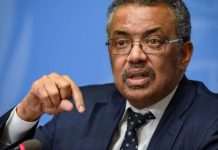
























The director general of the World Health Organisation (WHO), Tedros Ghebeyesus has congratulated the Nigerian government, health workers and responders for preventing the spread of the deadly Ebola virus disease.
In a statement posted on his X handle on Friday, Ghebreyesus said all 62 contacts linked to Nigeria’s imported case of Bundibugyo virus disease had completed 21 days of monitoring without any secondary transmission.
“A positive milestone in #Nigeria’s #Ebola response: all 62 identified contacts of the case reported on 20 October have completed 21 days of monitoring, with no secondary transmission detected.
“As the second half of the 42-day countdown begins, @WHO maintains its support and heightened vigilance.
“My congratulations to the government, health workers and responders for their success in preventing the spread of the Bundibugyo virus,” he wrote
Ghebreyesus’ commendation came in the wake of the announcement by the Nigeria Centre for Disease Control and Prevention (NCDC) that the 62 contacts linked to the index case of the imported Bundibugyo Virus Disease case had completed the mandatory 21-day monitoring without a secondary transmission.
The NCDC director-general, Dr Jide Idris, said a news conference in Abuja on Friday that the last contact was discharged after completing the mandatory monitoring period.
Idris said 13 of the 62 contacts developed fever or other symptoms during monitoring but tested negative for Bundibugyo Virus Disease following laboratory investigations.
He said seven additional alerts reported in Adamawa, Rivers, Borno, Lagos and Ekiti within three weeks were investigated, with all suspected cases testing negative after laboratory assessment.
However, he cautioned that completing contact monitoring does not constitute a formal declaration that Nigeria has a clean bill of health, emphasising that surveillance remains necessary.
He said such a declaration would depend on applicable public health criteria and findings from ongoing surveillance, particularly amid continued Ebola transmission in the Democratic Republic of Congo.
Idris said Nigeria had maintained heightened surveillance, with its National Emergency Operations Centre activated and Incident Management System operating at Level Three, the highest response level for Ebola.
He said the national response prioritised clinical care, contact tracing, prevention of further transmission, protection of healthcare workers and strengthening disease surveillance across affected and potentially exposed communities nationwide.
Idris said the index case was confirmed on October 20 in the Federal Capital Territory following an alert raised by healthcare workers through NCDC’s event-based surveillance system.
He also said the index patient was medically evacuated to Switzerland on October 26 for further management after receiving clinical care in Nigeria before her international transfer.
He said laboratory tests initially confirmed that she remained positive upon arrival in Switzerland, but she subsequently recovered, tested negative and was discharged from hospital following treatment.
Idris said the absence of secondary transmission demonstrates the importance of early recognition, prompt investigation, effective public health interventions and cooperation between health authorities and communities during disease outbreaks.
He urged Nigerians to remain vigilant, emphasising that completing contact monitoring did not remove the risk of possible Ebola importation into the country through international travel.